

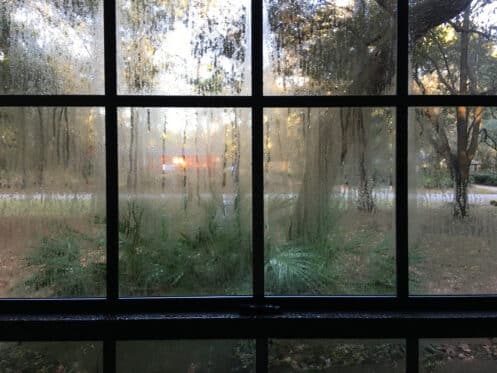
Historical climate records show that the Flathead Valley is experiencing later snowfall, earlier snowmelt, and higher overall humidity. Shorter winters are making moisture-related issues more common. Faster and more frequent freeze-and-thaw cycles increase stress on building materials, while higher levels of liquid precipitation create what many homeowners recognize as the “mudroom effect,” where moisture is tracked indoors and lingers.
As one of Montana’s regions with the highest winter humidity levels, the Flathead Valley is especially affected by lake-effect snow and freezing rain. Climate changes have made Flathead Lake less likely to freeze, contributing to wetter, muddier winters. When outdoor temperatures hover near freezing for extended periods, moisture is carried inside and trapped, creating an indoor greenhouse effect. These conditions can impact the performance and longevity of both HVAC and plumbing systems.
At Wild West Plumbing, Heating & Cooling, we’ve handled a growing number of HVAC and plumbing calls related to winter humidity in recent years. Modern winter challenges extend beyond frozen pipes and heating failures. Prolonged exposure to excess indoor moisture can strain equipment and degrade materials. Below are five common ways winter humidity affects HVAC and plumbing systems.
1. Premature HVAC Filter Clogging
High humidity makes indoor air heavier, allowing it to carry more airborne particles such as dust, pet dander, and fine debris. These particles accumulate quickly on furnace and heat pump filters, forming dense layers that restrict airflow. This indoor air quality issue forces the blower motor to work harder, increasing energy use and raising monthly utility bills.
Over time, restricted airflow leads to overheating, component wear, breakdowns, and a shortened system lifespan. When Wild West Plumbing, Heating & Cooling technicians notice filters clogging unusually fast, elevated humidity is often the root cause. We use hygrometers to measure moisture levels and investigate sources such as poor weatherstripping, excessive indoor plants, or firewood stored indoors. Early filter clogging is often the first sign of broader humidity-related issues.
2. Evaporator Coil Corrosion
When indoor air feels persistently damp, condensation can form on evaporator coils, especially in homes near Flathead Lake that rely on heat pumps. This moisture can lead to formicary corrosion, sometimes referred to as the “dirty sock effect.” This type of corrosion causes microscopic tunnels in copper coils, eventually resulting in pinhole refrigerant leaks.
Formicary corrosion occurs when moisture combines with organic compounds released by common household products such as cleaners, carpet fibers, and aerosols. As acids accumulate on the coil surface, bacteria and mold can develop, producing a musty or moldy odor when the system runs. These leaks are often difficult to detect and can significantly reduce system efficiency.
3. Pipe Corrosion and Green Copper
Shorter, wetter winters increase the risk of pipe corrosion, especially in homes with crawl spaces or unheated utility rooms. Persistent indoor humidity allows moisture-heavy air to settle in lower areas of the home. When this air contacts cold water or gas lines, condensation forms.
Repeated condensation accelerates oxidation, leading to the “green copper” effect on pipes, fittings, and solder joints. Over time, this chemical reaction weakens materials and causes pinhole leaks. Left unaddressed, pipe corrosion worsens humidity problems and increases the risk of winter plumbing failures.
4. Mold Growth Inside the Ductwork
Even well-sealed homes in the Flathead Valley can experience mold growth inside ductwork during humid winters. Warm, moisture-laden air passing through colder ducts, especially in attics and wall cavities, can reach the dew point, causing condensation to collect inside the system.
This damp environment, combined with airborne particles, creates ideal conditions for mold growth. Moldy ductwork can distribute spores throughout the home each time the furnace runs, contributing to respiratory irritation and “winter allergy” symptoms. For this reason, duct cleaning alone is not enough; technicians must also identify and address underlying moisture sources.
5. Attic Frost
Attic frost, sometimes called “attic rain,” is a common winter moisture issue in the Flathead Valley. Warm, humid air escapes through small gaps in insulation and air sealing, rising into the attic. When it contacts the cold underside of the roof deck, frost forms.
Excessive attic frost indicates heat loss and can lead to attic rain during freeze-thaw cycles. As frost melts, water can drip onto insulation, roof framing, and plumbing vent stacks. Saturated insulation loses its effectiveness, forcing heating systems to work harder and increasing energy bills. Water dripping down vent stacks can also be mistaken for a plumbing leak, creating unnecessary concern.
Professionals Can Help Reduce Winter Humidity Issues
At Wild West Plumbing, Heating & Cooling, our HVAC technicians and plumbers respond to winter humidity problems more frequently each year. Wetter winters and lake-effect conditions require a proactive approach to home comfort systems. We recommend annual HVAC, gas, and plumbing inspections to identify vulnerabilities caused by excess indoor moisture.
With proper maintenance and humidity control, indoor moisture levels can be kept below 35% during winter. This helps protect your HVAC equipment, plumbing systems, and home structure while reducing the risk of breakdowns and emergencies.
To learn more about protecting your home from winter humidity, contact Wild West Plumbing, Heating & Cooling today.




 Financing
 Careers